Designing a data management module for a SaaS platform
Centralizing complex geospatial data management into a single, intuitive interface.
Skills
UX/UI Design, SaaS B2B
Sector
Industry, IA
Date
2023/2024

Context
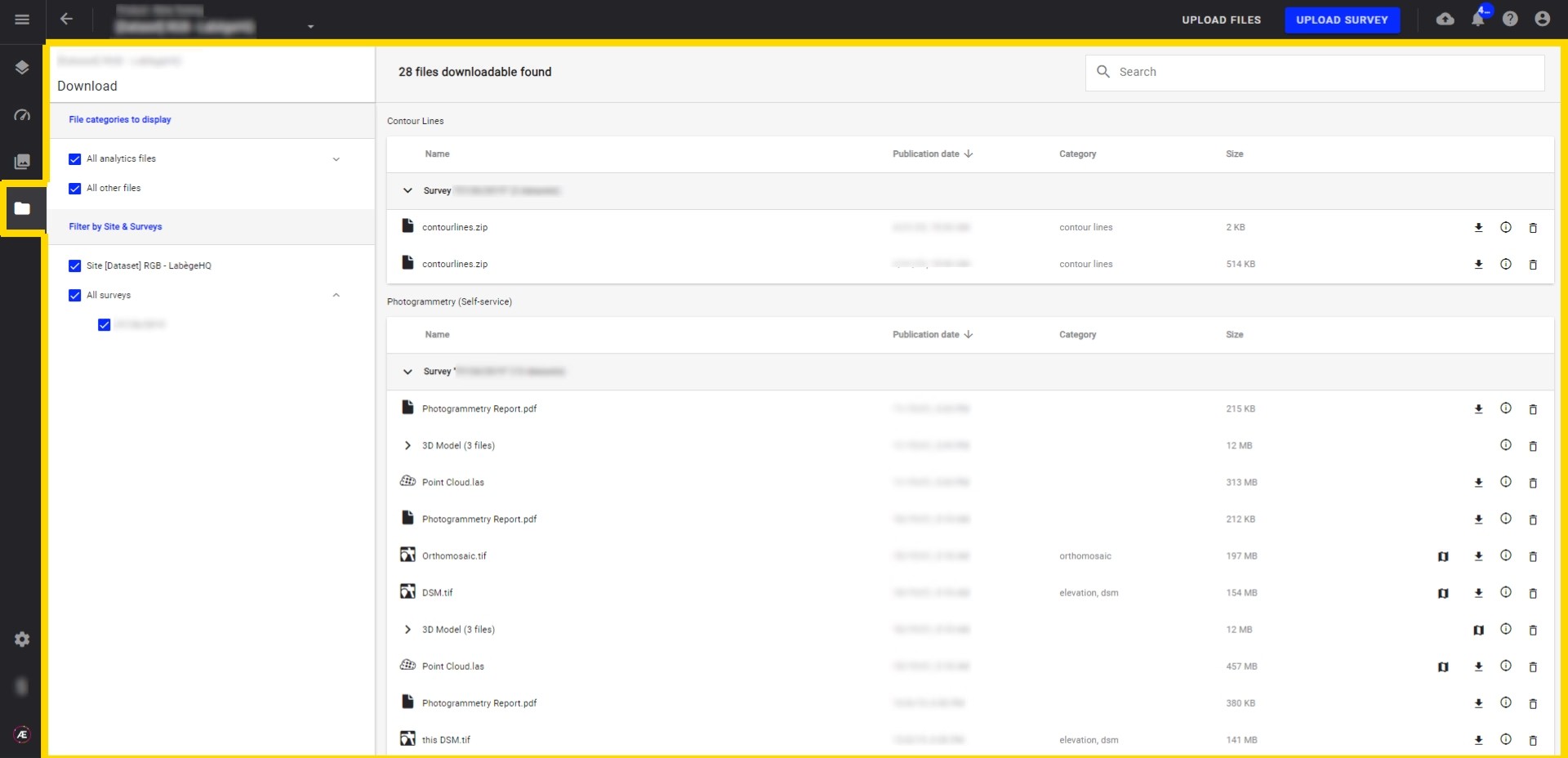
Aether is Alteia's SaaS platform that leverages AI to centralize and analyze visual and geospatial data. Users navigate a hierarchical environment structured around three levels: Company → Project → Survey. Data sets were only managed at the project level via a single tab - creating fragmentation and limiting any global view of the data.
The problem
The platform’s data architecture followed a strict hierarchy (Company > Project > Survey). Consequently, data sets were fragmented and could only be managed at the "Project" level. This outdated interface made it difficult for users to manage technical files (3D models, point clouds) and prevented them from getting a comprehensive overview of their assets.
Strategic objectives
Unification: Create a single interface for a global data overview.
Efficiency: Implement advanced search, filtering, sorting, and renaming tools.
Transparency: Provide direct access to technical metadata (coordinates, size, file types).
Design process
Analysis and subject understanding : Before starting the design, I took the time to fully understand the challenges and what was expected. This involved discussions with the product owner and understanding the documentation written by the Product Manager.
Competitive analysis and best practices research : I conducted in-depth research on data tables from various existing solutions (Google Drive, Gmail, Dropbox, etc.) as well as on design best practices.
Examples of features analyzed: table structure, multi-selection management, data actions (conversion, export, deletion, etc.), information architecture, filter and sort options, data details, etc.
Solution exploration : I explored a wide range of low-fidelity design ideas (wireframes), trying different approaches. I then selected the most promising solutions based on their alignment with the objectives and their technical feasibility.
Design : After validating the concepts with the PO and developers, I designed the chosen solutions as high-fidelity mockups and then as interactive prototypes in Figma. I made sure to use components from our Figma and developer libraries as much as possible. These prototypes allowed me to simulate the interactions and functionality of the module.
Iteration : I worked in an iterative manner, creating increasingly high-fidelity mockups and interactive prototypes. These prototypes were regularly presented and discussed with the product owner, the lead UX, and the developers. This allowed me to gather feedback and progressively refine the interface until the final result.
Technical limitations
The development of the Data Management module presented several technical challenges that had to be considered throughout the design phase. These limitations included:
- Large data volume: The platform could contain several million data entries, which required designing a high-performance table capable of handling large quantities of information without slowing down.
- Multi-selection issue across multiple pages: The platform was unable to properly manage multiple data selections spread across several table pages. Given the time constraints and to avoid increasing technical debt, it was decided to prioritize a simpler solution for the initial phase: multi-selection limited to visible data (not persisted across multiple pages).
Mockup overview
The user flows are not presented in their entirety.
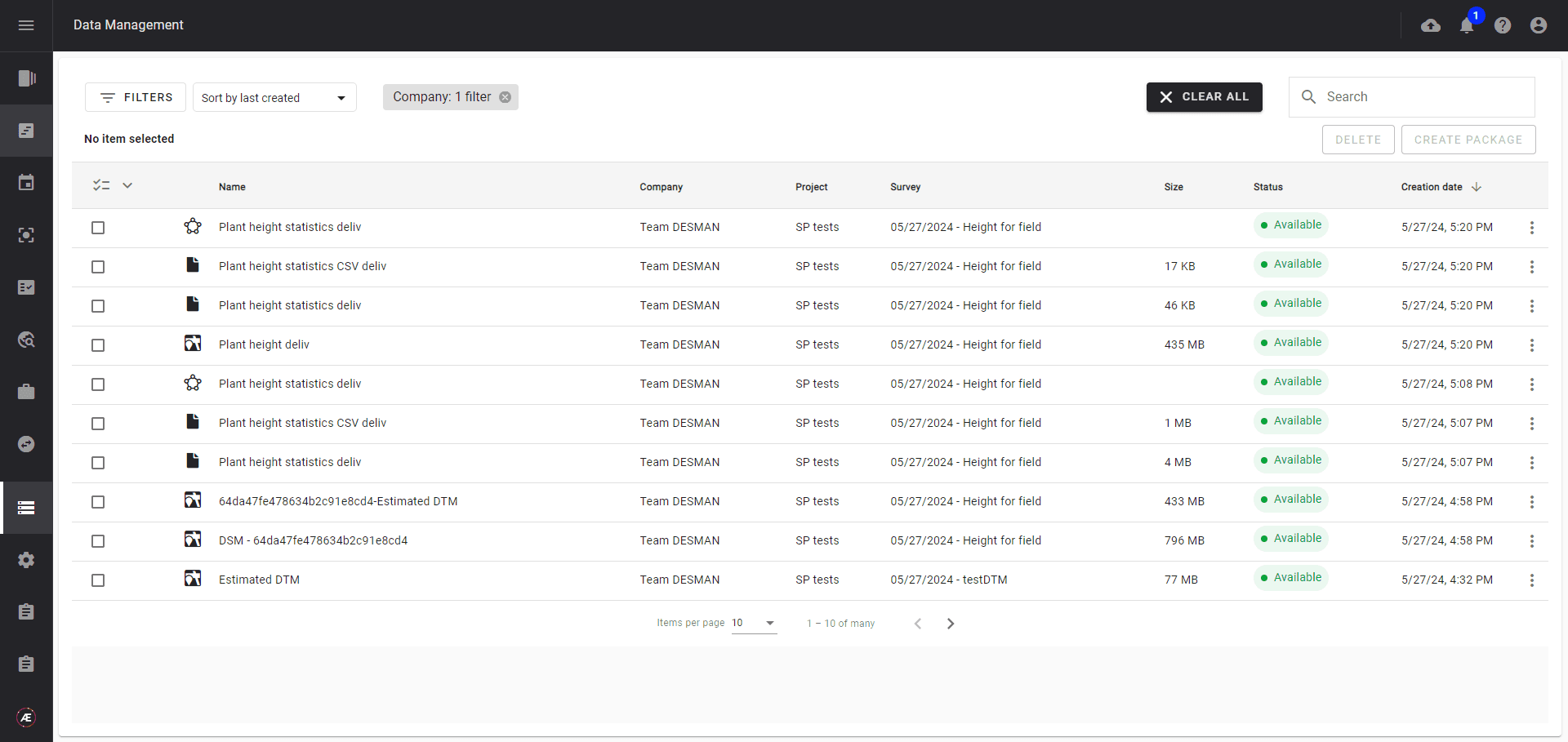
Dashboard
The dashboard provides a synthetic view of the data. By default, it displays the most recently created data.
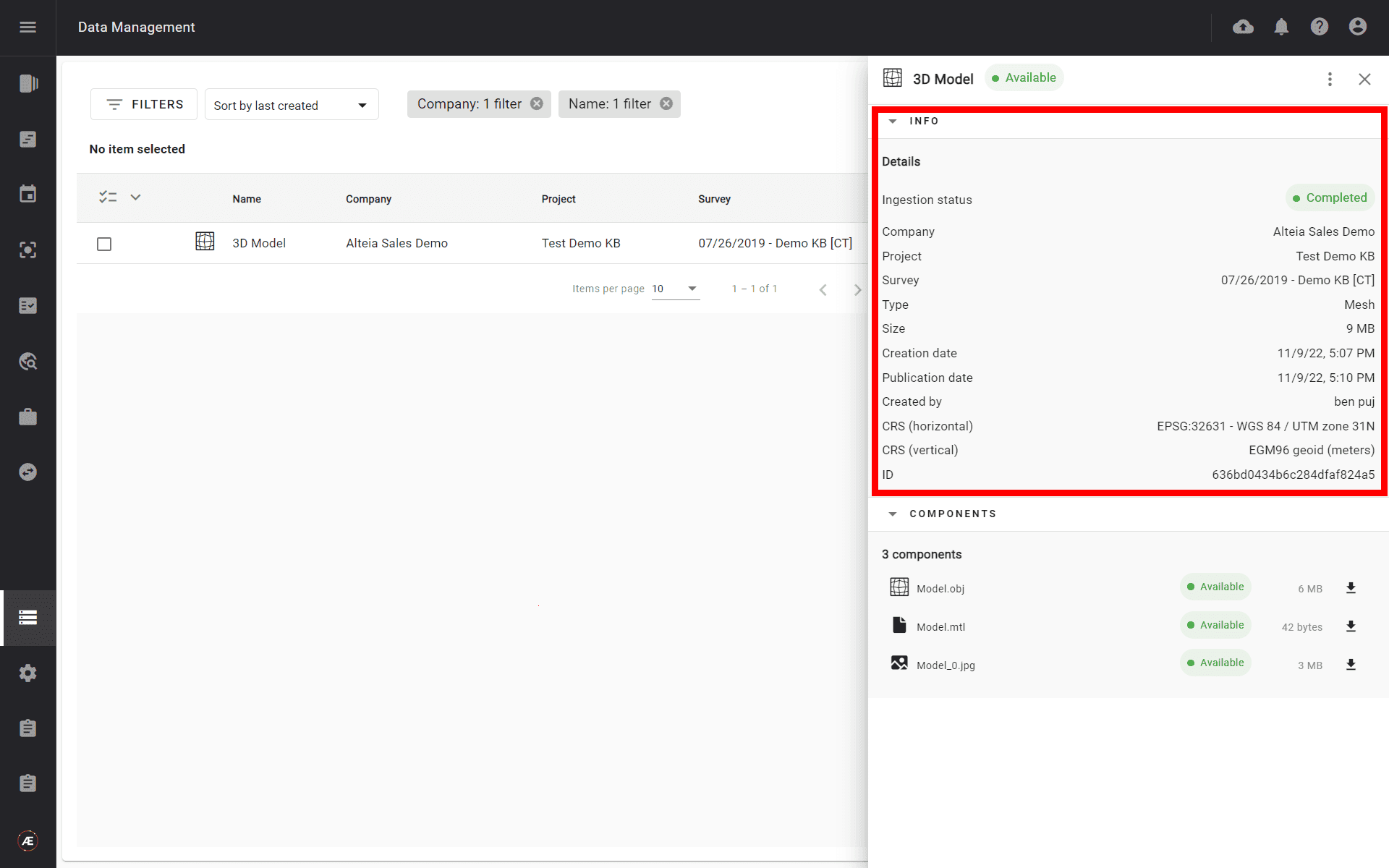
Data set information
This panel displays detailed information for a selected data entry in the main table, as well as the ability to perform different actions on the data (download, rename, delete, etc.).
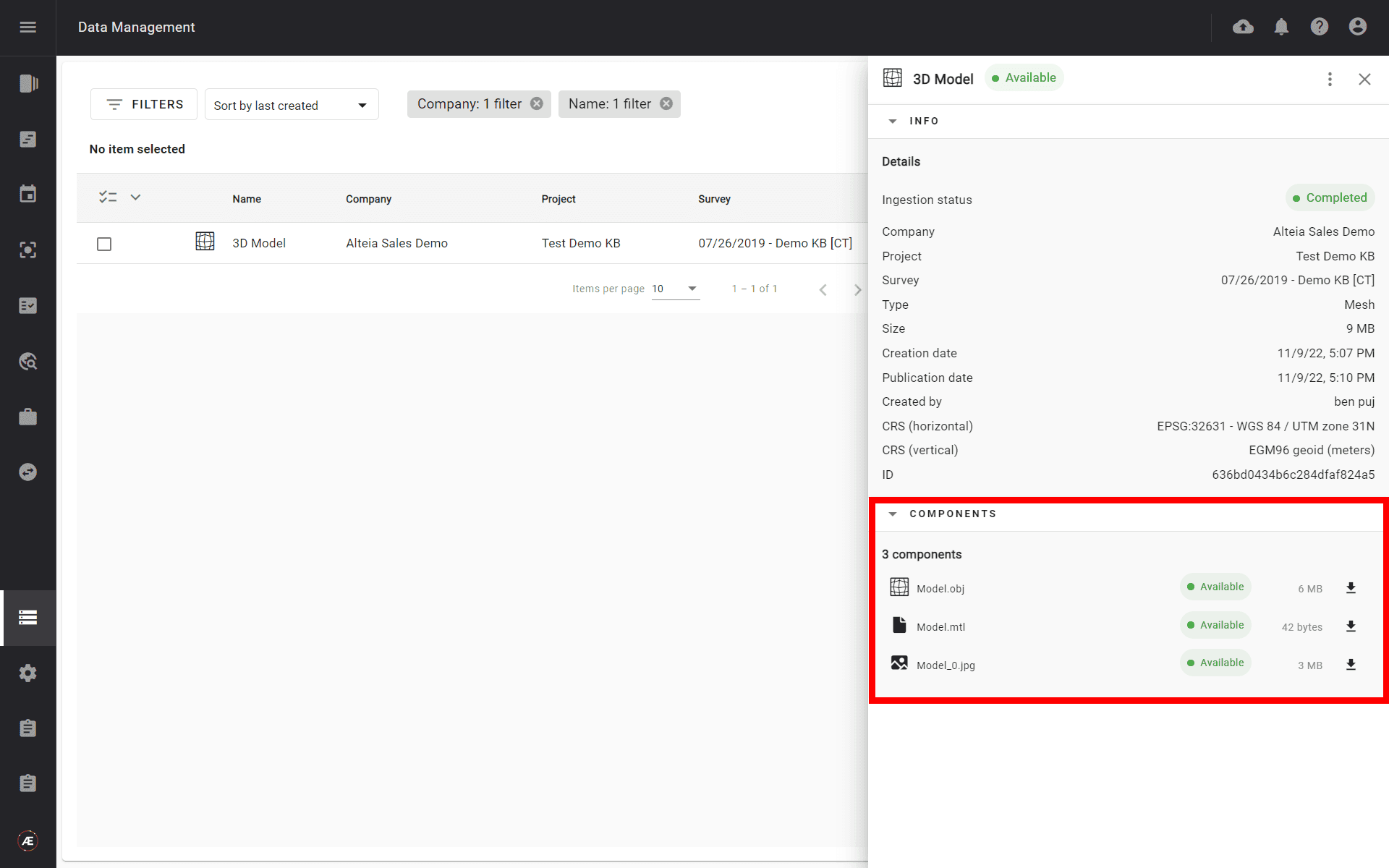
Data componants
A data entry can contain one or more components. Each can be downloaded separately.
Results
The Data Management module was successfully integrated into the Aether platform. Initial feedback from users and stakeholders has been very positive. They highlighted the usefulness of centralizing data management, the simplicity of the new module, the clarity of the information display, and the efficiency of the data table.
The simplified multi-selection solution was also considered satisfactory for the initial phase, given the technical constraints. Close collaboration with the development team allowed us to find viable technical solutions that did not compromise the user experience.
Lessons learned
As a junior designer, having the responsibility to design a module so central to the Aether platform represents a significant achievement. I had the opportunity to gain autonomy by managing a strategic product element like data management from start to finish.
This project allowed me to implement a complete UX process, from the initial phase of understanding needs to the delivery of the final user interface, thus consolidating my skills across the entire design process.
A crucial aspect of this achievement was the need to manage technical constraints while maintaining a user-centric approach. This demanded rapid iterations, strengthening my sense of compromise and collaboration with the technical teams.
Working in close collaboration with the developers and the Product Owner was essential to ensure the alignment of objectives and the feasibility of the proposed solutions, highlighting the importance of fluid communication and mutual understanding within the team.
Other projects

Optimize the visibility of real-time AI data processing
Bringing transparency and spatial visibility to the visual data automation process.
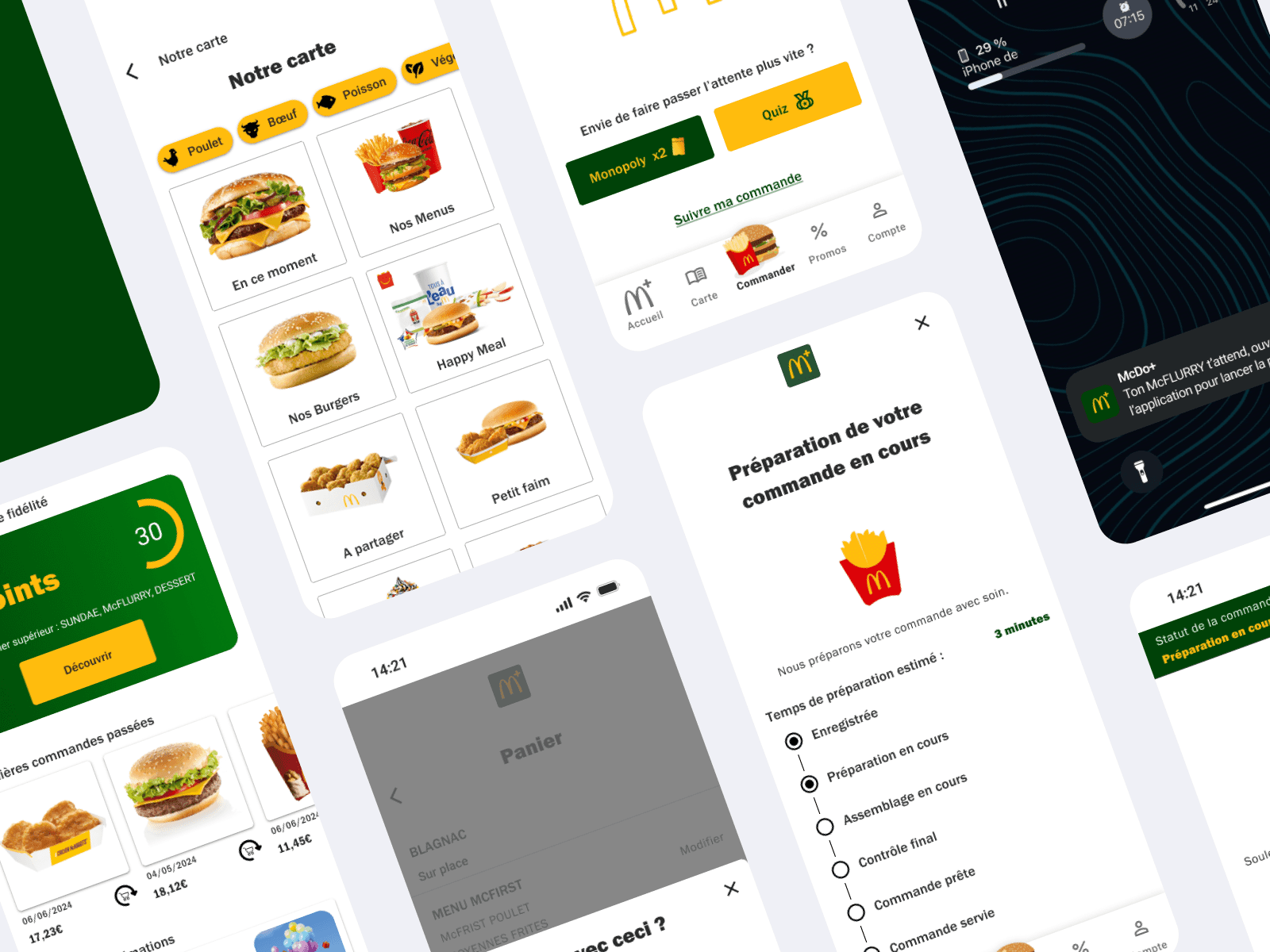
Wait Design: Optimizing the waiting experience at McDonald's
Leveraging UX methods and cognitive science to transform waiting into a pleasant and engaging experience.
See more